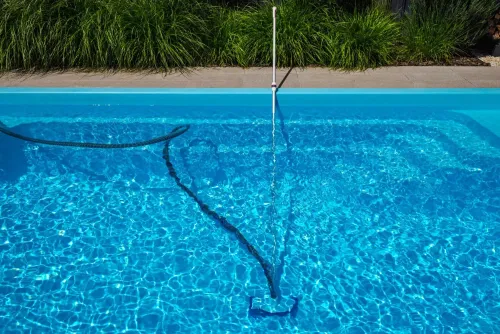
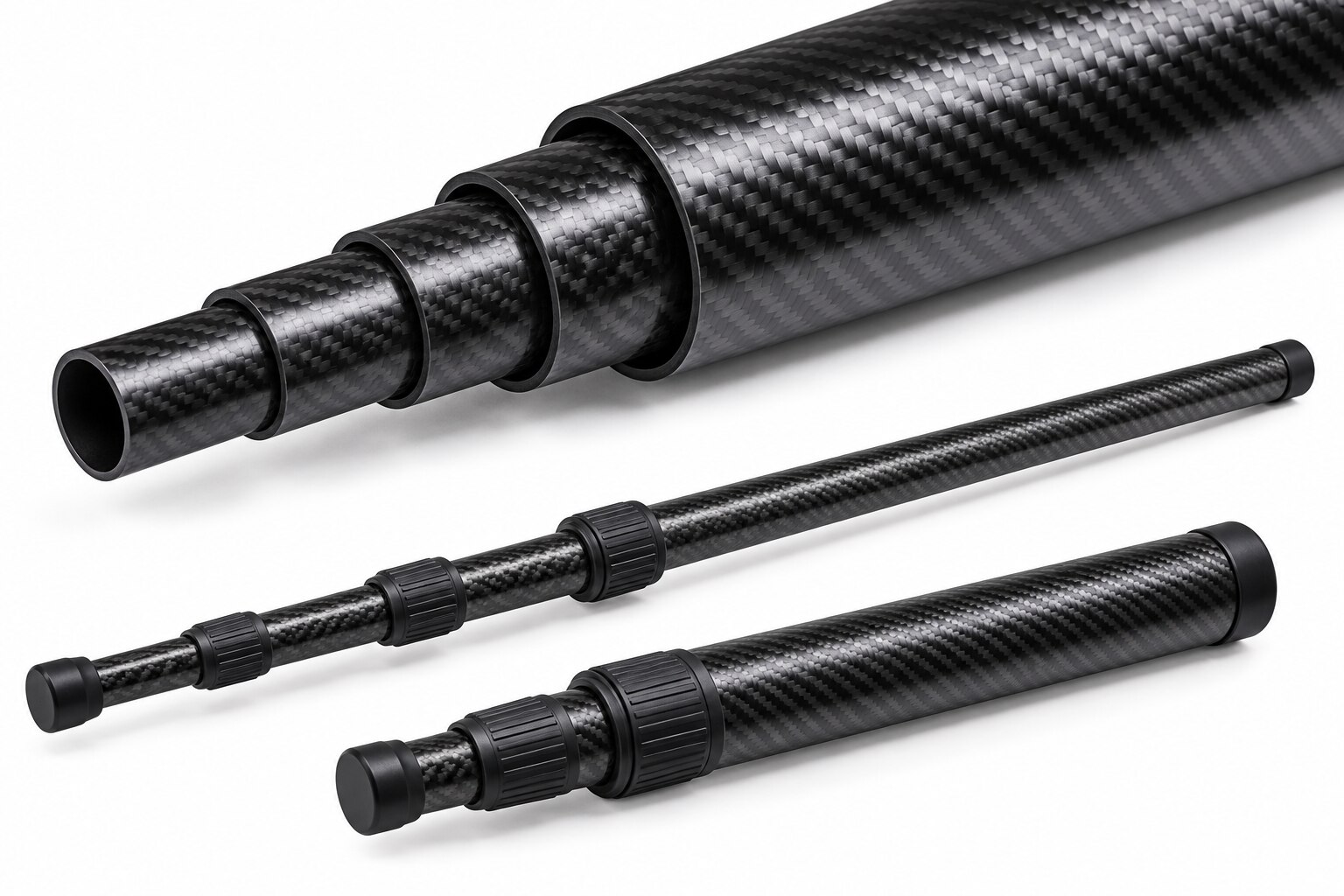
Salt, sand, monsoon water and wind turn a simple reach tool into a maintenance system with limits that are easy to miss. You will be able to specify working length, check the tube and hardware, set coastal-care procedures and decide when a handheld telescopic tube is unsuitable.
Key takeaways
- Specify usable working length, overlap and tool load—not reach alone.
- Rinse salt deposits from every section, clamp and fitting after coastal work.
- Check section fit, locking hardware and test evidence before ordering.
- Use another system for heavy loads, side loads or life-safety access.
How Mumbai maintenance crews use a round telescopic tube at ground level
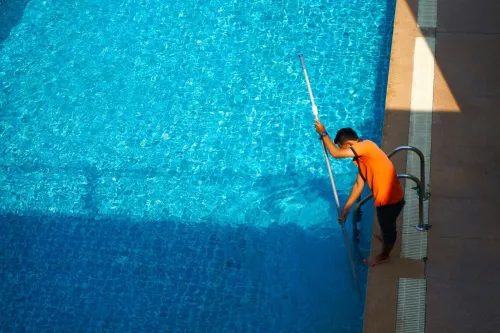
A round telescopic tube suits ground-level washing and inspection where the tool must reach upward without placing a worker on a ladder. Typical targets include windows, façades, signs, gutters, jetty edges and vessel sides, using a soft brush, squeegee, low-pressure wash head, inspection camera or light scraper.
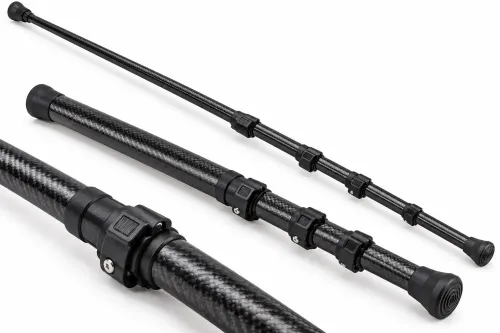
Round carbon fiber telescopic tubes in Mumbai offer a useful reach-to-weight comparison, but compare the deployed assembly rather than the bare tube.
| Option | Complete-system consideration | Best fit |
|---|---|---|
| Round carbon-fibre tube | Add locks, sleeves, end caps, rope, tool head and replacement sections to the mass; field repairs need planned parts | Long overhead cleaning and camera inspection |
| Aluminium tube | Usually easier to dent, repair and source locally; account for heavier handling and salt-exposed hardware | Shorter reaches, rough handling and simple tool work |
Use the tube from a stable, level position. Extend only the sections needed, keep the manufacturer’s minimum overlap inside every joint, and confirm each lock before lifting the tool.
Hold the lower section with both hands, keep the tube near vertical, and guide the head with small movements rather than levering it against masonry, glass or a vessel hull.
- Face the work so the tube does not cross traffic, cranes, open water or overhead lines.
- Keep a second worker clear of the swing path when wind catches a long tube.
- Fit a tool head that matches the task; a heavy scraper or water-filled attachment increases bending and side load.
- Treat a standard carbon tube as electrically conductive, not as an insulating pole. Use a qualified dielectric system near energised equipment.
Treat the complete assembly, not just the carbon laminate, as the corrosion problem
Carbon fibre does not rust, but a complete assembly is not corrosion-proof. Salt-laden air and sea spray leave chlorides on the laminate, ferrules and fittings; humidity keeps them active, while monsoon water drives contamination into joints. A specification for a corrosion resistant telescopic tube in India must cover every exposed part, not only the laminate.
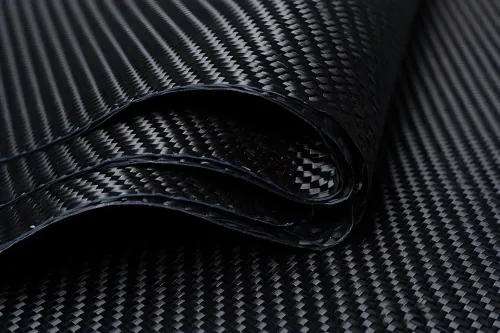
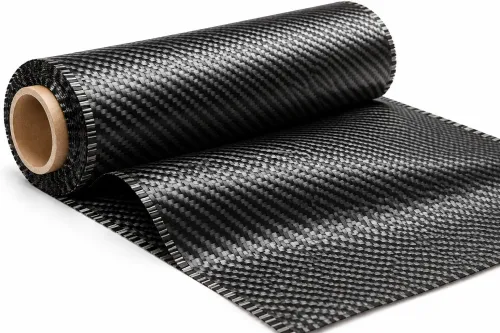
Epoxy or vinyl-ester resin can absorb moisture, and exposed fibre ends or damaged edges can degrade. Sand, dried mud and biological residue enter the annular clearance between sections, then grind the surfaces as the tube telescopes. The usual failure is a seized or rough-running joint, not a visibly rusted carbon wall.
Check these points across the finished assembly:
- Seal or protect cut ends, drilled holes and laminate edges against water ingress.
- Provide wipeable sections, controlled drainage and replaceable wear interfaces; sealing a contaminated joint can trap salty water.
- Specify clamps, pins, bolts, threaded inserts, ferrules and tool adapters for chloride exposure, not just indoor use.
- Electrically isolate carbon from aluminium, zinc-plated steel and other less-noble metals with nonconductive bushings or washers.
Carbon can accelerate galvanic attack where saltwater bridges it to aluminium or zinc-plated steel. Stainless fasteners reduce one risk but do not prevent crevice corrosion beneath washers, threads or trapped deposits.
ASTM B117 salt-spray results help compare metallic coatings, but they do not prove retained stiffness, section fit or lock performance. Request wet-condition friction, lock-cycle, water-ingress, UV and post-exposure load-retention evidence for the assembled tube.
Specify usable working length, overlap and load before choosing a reach figure
A reach figure is safe only after you subtract every unusable part. Calculate usable working length as the deployed tube length minus section overlaps, the grip zone, the end fitting and the clearance you need from the façade, parapet, traffic, cranes and overhead lines.
Add the tool-head length only if it remains controllable from the operator’s position.
Use the longest extension with the smallest permitted overlap as the design case. That configuration has the least stiffness and the greatest bending demand.
For a round carbon fibre telescopic tube in mumbai, ask the supplier to state minimum overlap, deployed length, section diameters, supported load, cantilevered load, allowable tip deflection and safety factor for the actual lock geometry.
| Load case | What to calculate | Evidence to request |
|---|---|---|
| Tool weight | Tool, adapter and water or debris acting through the tube | Rated supported and cantilevered loads |
| Wind | Pressure on the tube, brush or camera multiplied by projected area | Wind speed and test configuration |
| Side force | Hand force, snagging, brushing resistance and contact with a surface | Bending moment and allowable tip deflection |
Check the worst combined condition, not each load separately. A side force at the tip creates a bending moment equal to force multiplied by distance from the lock, while wind can add a sustained load.
Do not rely on fibre tensile strength alone. Request compression, bearing and ovalisation data at collars, locks and end fittings; a clamp can crush a section that passes a laminate coupon test.
Verify section fit, locking hardware and evidence before placing an order
A quotation that says “maximum reach” is incomplete. Request the deployed length, retracted length, number of sections, outside diameter, wall thickness, section length, minimum overlap and section-to-section clearance for every configuration.
1. Ask for a dimensioned drawing showing straightness tolerance, ovalisation limits and the weakest extension. Specify the tool-end interface: thread size, bolt pattern or quick-release fitting, maximum tool mass and allowable side load. Confirm whether adapters, end caps and protective sleeves are included.
2. Require a rating for the longest extension with minimum overlap, covering supported and cantilevered loads, wind speed, allowable tip deflection and stated safety factor. Ask for local compression, bearing and ovalisation data at collars and locks; fibre tensile strength alone will not show whether a clamp can crush the section.
3. Request test records from the finished assembly, not only a resin datasheet. Look for lock-cycle results, wet-condition friction, water-ingress checks, UV exposure and post-exposure load retention. ASTM B117 salt-spray results can compare metal coatings, but they do not prove retained carbon-tube stiffness or locking performance after Mumbai service.
4. Get a written replacement schedule: individual section, lock, collar, ferrule, pin, threaded adapter and end fitting part numbers, prices or quotation basis, lead times, interchangeability and field-replacement instructions. Ask how contaminated joints drain and which surfaces you can wipe without damaging the laminate.
Compare complete deployed-system mass, including hardware and adapters. Carbonext India Pvt Ltd can be asked to quote that total alongside the drawing and evidence pack, rather than a tube-only weight.
Related products
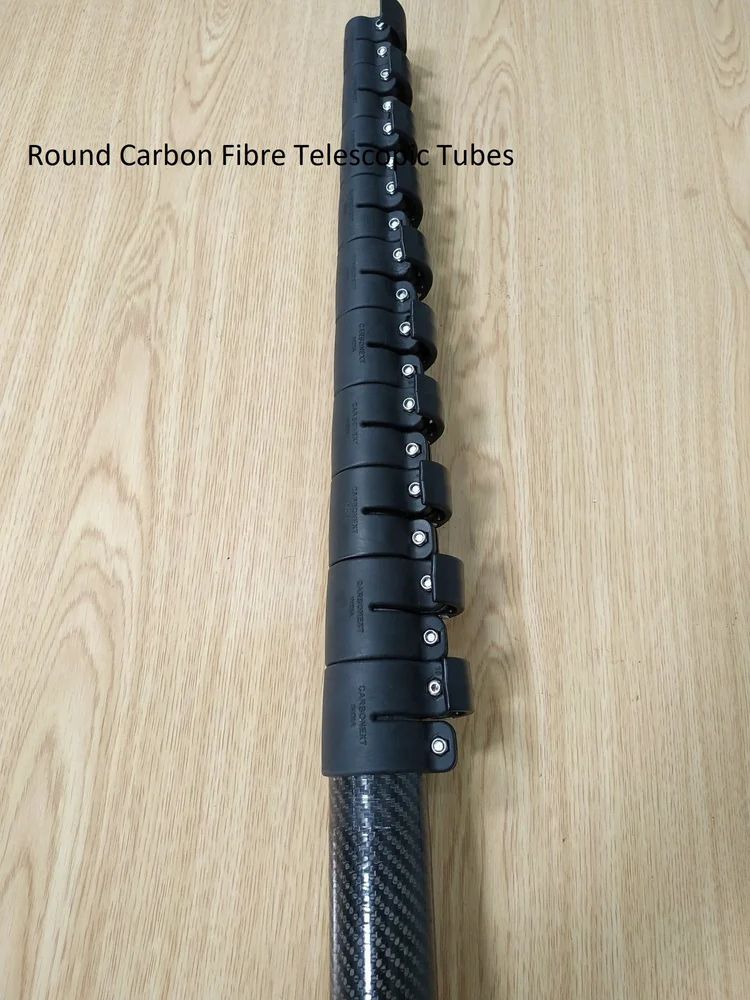 | Telescopic Pole Round Carbon Fibre Telescopic Tubes Design Carbon Fibre Size 20 Feet Usage/Application Cleaning Window Features Strong Brand Carbonext Color Black Packaging Type Box We are engaged in... View product → |
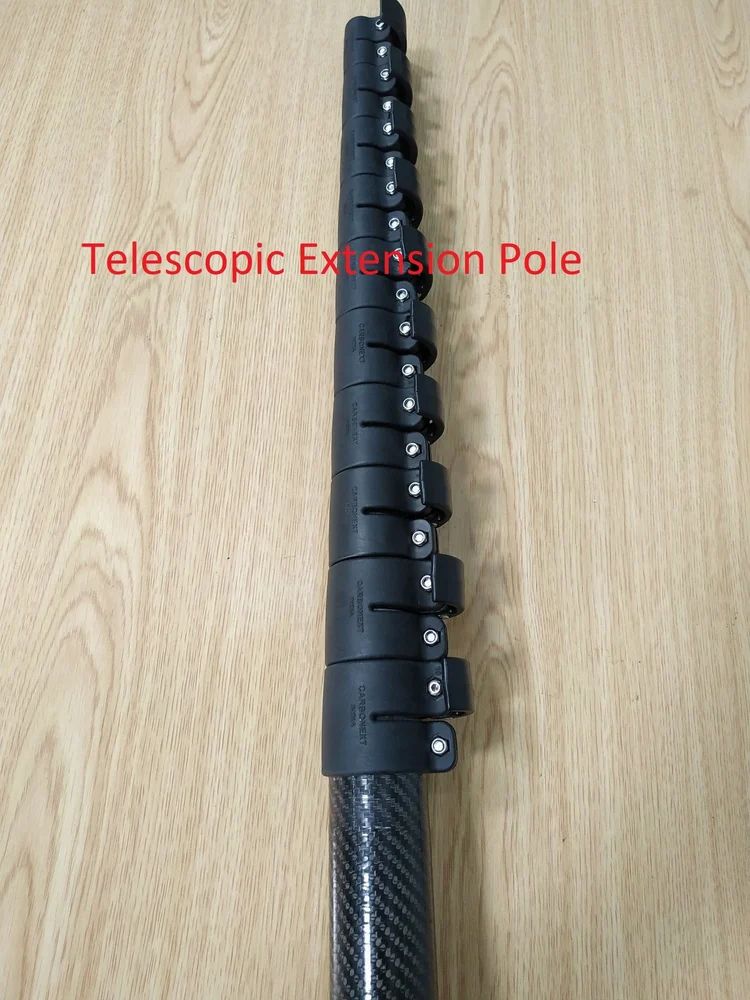 | Telescopic Pole Maximum Length 20 to 80 Feet Country of Origin Made in India Lightweight 100% Carbon Fibre 100% Genuine Carbon Fibre Telescopic Pole. View product → |
Set a rinse, inspection and storage routine—and recognise jobs that need another system
After every coastal shift, rinse the tube and its hardware with fresh water, dry it fully, inspect it, and store it out of salt-laden air. Do not mistake a glossy finish or an ASTM B117 salt-spray result for proof that locks and joints remain reliable.
- Flush salt, sand and grit from section joints, clamps, pins, ferrules, threaded adapters and end fittings using low-pressure fresh water. Use only a manufacturer-approved cleaner.
- Dry each section before retraction. Trapped water inside an overlap can accelerate edge damage and leave grit that jams the lock.
- Check for chalking, cracking, blistering, exposed fibres, crushed edges and loose fittings. Examine metal parts for pitting, staining, seized threads and distorted pins.
- After a drop, collision or severe levering load, quarantine the section. Never hammer or lever a jammed section; use tap testing or an agreed non-destructive inspection when failure would endanger people.
- Store sections straight, capped, dry and shaded, away from heat, chemicals and sharp loads. Record damaged or replaced sections.
| Option | What it means | When it applies |
|---|---|---|
| Platform or scaffold | A stable working deck | Choose it for prolonged work, two-handed force, heavy tools or repeated access at one elevation. |
| Rope-access system | Certified anchors, harnesses and trained technicians | Choose it for difficult façades where a platform or boom cannot reach, after a rescue plan and structural assessment. |
| Boom lift | A powered elevated platform | Choose it for changing positions, substantial tools or sites needing controlled clearance from traffic and façades. |
A bare carbon tube is not electrical insulation. Near energised equipment, use a qualified dielectric system or another controlled access method.
Frequently asked questions
How do Mumbai maintenance crews use a round telescopic tube at ground level?
Crews use it to reach windows, façades, signs, gutters, jetty edges and vessel sides with tools such as soft brushes, squeegees, low-pressure wash heads, inspection cameras and light scrapers.
Why should you treat the complete assembly as the corrosion problem?
Salt exposure affects clamps, locks, fasteners, end fittings and tool mounts as well as the carbon-fibre laminate. Inspect and rinse the complete assembly after coastal work.
What should you specify before choosing a reach figure?
State the usable working length, section overlap, tool weight, side load, operating angle and required stiffness. A quoted maximum reach does not define safe working performance.
What should you verify before ordering a telescopic tube?
Confirm section fit, locking hardware, closed and extended dimensions, tool compatibility, load guidance, inspection evidence and material or test documentation.
When is a telescopic tube the wrong system?
Choose another system for heavy attachments, high side loads, powered tools, rescue or fall-protection duties, or work requiring a worker to climb or rely on the pole for life safety.
Related products
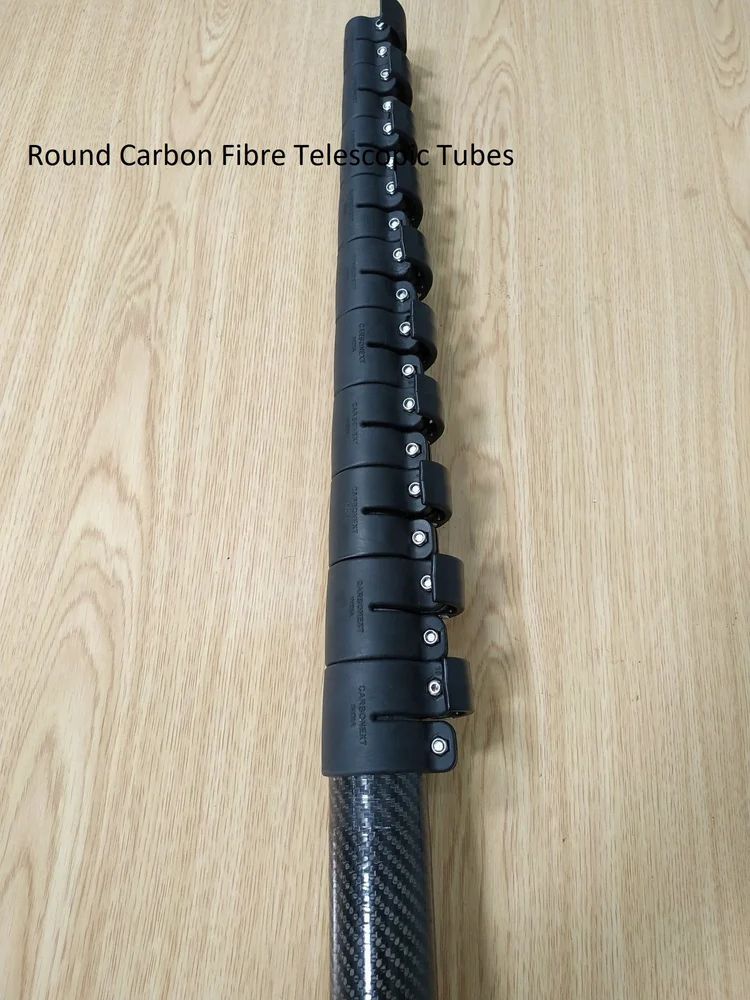 | Telescopic Pole Carbon Fibre Adjustable Telescopic Pole Material Carbon Fibre Usage/Application Industrial Color Carbonext Brand Carbonext Country of Origin Made in India Weight 6 kg Colour Black Height 70... View product → |
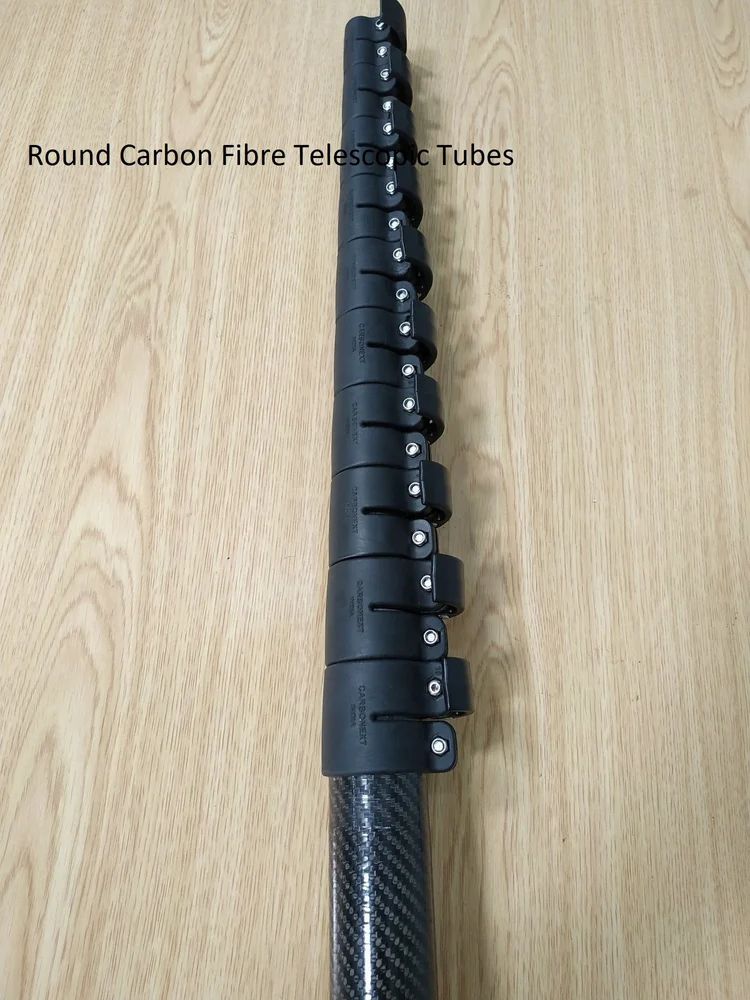 | Telescopic Pole Black Telescopic Extension Poles Material Carbon Fiber Brand Carbonext Warranty 6 Months Usage/Application Industrial Length 80 feet Country of Origin Made in India Packaging Type... View product → |
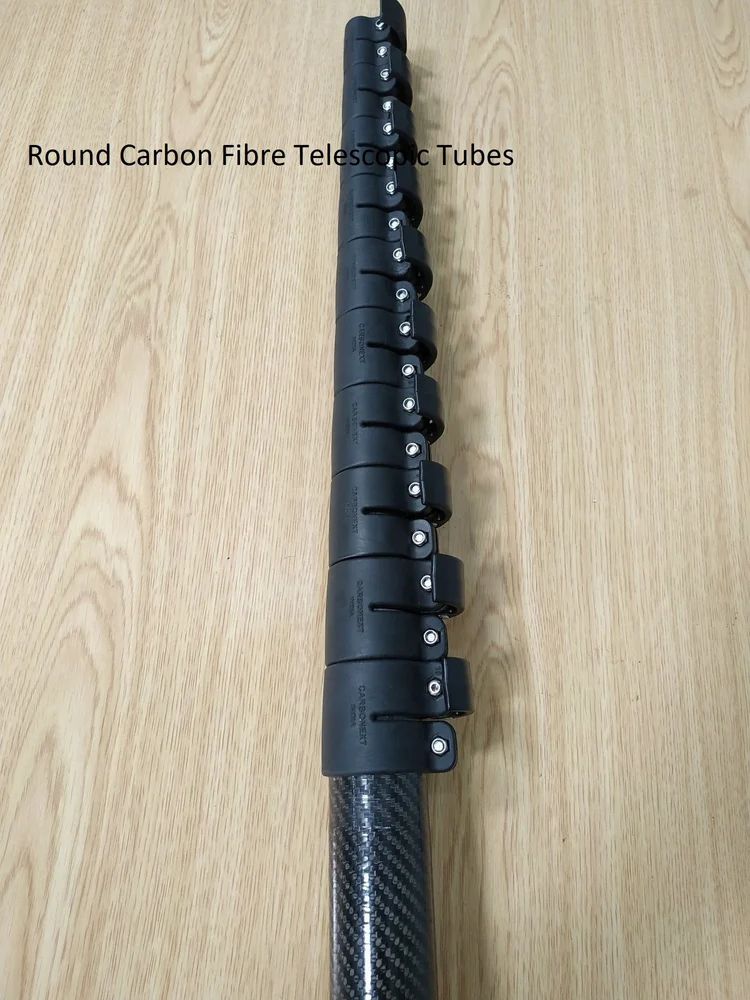 | Telescopic Pole Warranty 3 Months Color Black Dimension 20 Feet Onwards Surface Type Carbon Fibre Country of Origin Made in India Material Carbon Fibre Surface... View product → |
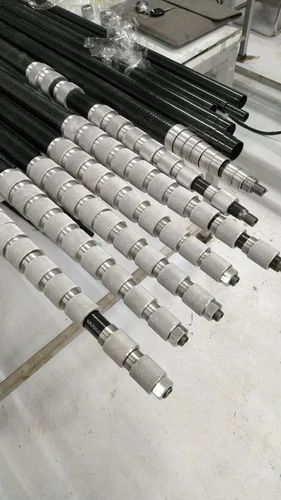 | Telescopic Pole Material Carbon Fibre Usage/Application Pool Cleaning Color Black Brand Carbonext Warranty 1 Year Surface Finish Glossy Country of Origin Made in... View product → |
Keywords