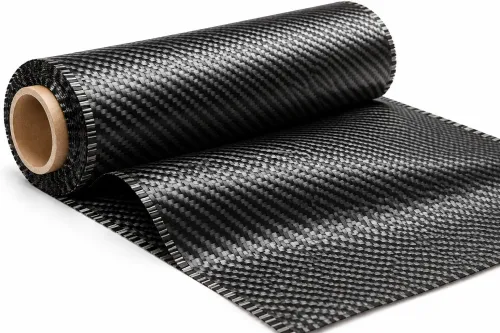
A nominal thickness is not enough to select a carbon-fibre panel for a machine bracket, guard, fixture or structural part. You will be able to compare laminate construction, mechanical evidence, dimensional quality, machining risks and delivered quotations before placing a Nashik order.
Key takeaways
- Match thickness to span, load direction, fastener loads and stiffness.
- Request tensile, flexural, compressive and interlaminar shear data for the laminate.
- Include dimensions, tolerances, cutouts, holes and machining in the quotation.
- Compare delivered price after freight, cutting, machining, rejects and taxes.
Choose thickness and laminate construction for the equipment part
Choose thickness from the part’s span, load direction, fastener loads and required stiffness—not from the carbon-fibre label alone. A thin guard may need less material than a short bracket carrying a bolt preload.
| Thickness | Suitable starting point | Construction and caution |
|---|---|---|
| 3 mm | Covers, guards, light panels and small fixtures | Woven or quasi-isotropic solid laminate; check deflection around holes |
| 4–5 mm | Brackets, machine panels, jigs and moderate-span covers | Balanced woven laminate or multiple oriented plies; add local reinforcement where bolts enter |
| 6 mm | Stiff panels, structural brackets and longer fixtures | Confirm whether it is solid laminate or sandwich construction before comparing quotations |
A 6mm carbon fiber sheet Nashik listing may describe a 6 mm sandwich, not a 6 mm solid plate. Request the core type, skin thickness and adhesive system for foam or honeycomb construction; a sandwich panel can be very stiff but unsuitable for crushed edges, tapped holes or concentrated loads.
Ask for fibre type, fabric style, resin system, fibre orientation, ply count, cured thickness tolerance, flatness and surface finish. Woven laminate suits multidirectional handling loads. Unidirectional plies suit a known primary load direction, while quasi-isotropic layups spread performance across 0°, 90° and ±45° directions.
For a structural component, specify compression-moulded, pultruded or autoclave-cured construction only after confirming the required properties. A decorative carbon-look panel is not an engineering laminate. Send the actual phrase 6mm carbon fiber sheet nashik only as a search lead, then verify the datasheet and certificate of conformity.
Ask for mechanical data that matches the load
A tensile value alone does not prove a sheet will survive equipment loading: request laminate-specific allowables for the load direction, temperature, moisture condition and failure mode, then check them against calculated stress with your design safety factor.
Ask for these items with the quotation:
- ASTM D3039 tensile strength and modulus, with fibre direction and specimen conditioning stated.
- ASTM D790 flexural strength and modulus for panels, covers or brackets that bend.
- ASTM D6641 compression data when a support, fixture or column carries compressive load.
- Interlaminar shear strength, open-hole strength and bearing strength when bolts, inserts or drilled holes transfer the load.
- Fatigue data when the equipment cycles, vibrates or starts and stops repeatedly.
- The laminate schedule: fibre type, fabric or unidirectional plies, orientation, resin, cured thickness and test temperature.
| Evidence | What it proves | What it does not prove |
|---|---|---|
| ASTM D3039 | Coupon tensile performance in a stated direction | A bolted joint, buckling part or complete guard |
| ASTM D790 | Coupon bending performance | Long-term fatigue or local fastener failure |
| ASTM D6641 | Combined-loading compression performance | Stability of a thin panel or finished assembly |
| Component proof test | Behaviour of the actual geometry, joints and restraints | Performance outside the tested load and service limits |
Request allowable stress, maximum service temperature, moisture exposure, deflection limit and proof-load procedure. For a fabricated pole or bonded section, demand buckling calculations and joint test results; flat-sheet strength is not enough. If fire exposure matters, request the resin-specific fire test and required classification separately from mechanical data.
Specify dimensions, tolerances and machining requirements before quoting
Send a drawing, not just “3 mm”, before asking for a quote: specify finished length, width, thickness tolerance and flatness so the panel fits the equipment without corrective machining.
- State whether you need a full sheet, cut blank or finished part. Give overall dimensions, corner radii, edge chamfers, cutout locations and allowable kerf.
- Define tolerances for length, width, hole diameter, hole position, thickness and flatness. A nominal 3 mm laminate is inadequate for sliding interfaces or bonded assemblies without these limits.
- Identify the laminate construction: woven or unidirectional plies, fibre orientation, resin system, surface finish and whether a 6 mm panel is solid laminate, bonded plies or a sandwich with skins, core and adhesive.
- Attach a machining drawing showing hole sizes, countersinks, threads, slots and datum references. State whether the supplier must cut and machine it, or supply unmachined stock.
- Request the proposed tool process, edge sealing, dust extraction, panel lot number and certificate of conformity. Ordinary high-speed-steel tools wear rapidly, while carbon dust contaminates equipment and threatens respiratory health.
Ask for both full-sheet and cut-piece prices. Include GST, cutting, setup, wastage, protective film, packaging, freight and delivery to Nashik.
A search for “3mm carbon fiber sheet supplier Nashik” still leaves the key question unanswered: is the seller a laminate manufacturer, stockist, converter or machine shop? Require material traceability and confirm stock status before approving the quote.
Compare Nashik suppliers and the real delivered sheet price
Compare a Nashik quote on an equivalent panel and delivered scope, not on the headline rupees-per-square-metre figure. A quotation for “6 mm carbon fibre sheet” could describe a solid laminate, bonded plies, or a foam or honeycomb sandwich with thin skins.
Supplier type changes what you are buying:
| Supplier type | What the quote may cover | Ask before comparing |
|---|---|---|
| Fiber producer | Carbon fibre or fabric, not a finished panel | Fiber grade, fabric style and lot traceability |
| Laminate manufacturer | Cured sheet with specified lay-up | Resin, orientations, cure route, thickness and flatness |
| Stockist | Existing panel from another maker | Manufacturer, batch number and certificate of conformity |
| Converter or machine shop | Cut, drilled or machined blanks | Tooling, dust extraction, edge sealing and machining tolerances |
For a “3mm carbon fiber sheet supplier Nashik” search, require thickness tolerance and flatness in the RFQ. For a 6 mm panel, state solid, bonded-ply or sandwich construction; request core type, skin thickness and adhesive system where relevant. Include dimensions, surface finish, fibre orientation and whether the sheet arrives unmachined or cut to size.
Calculate the real carbon fiber sheet price in nashik by adding GST, cutting, protective film, packaging, freight, wastage, inspection documents and machining. Ordinary high-speed-steel tools wear quickly on carbon laminate, so a low sheet price can become an expensive workshop job.
Carbonext India Pvt Ltd is worth comparing as a laminate source only after these construction and delivery fields match.
Related products
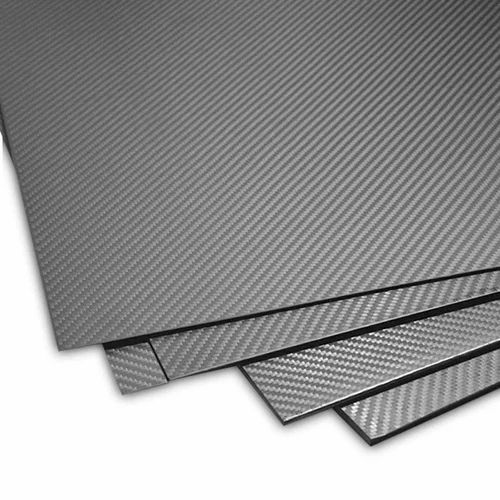 | Carbon Fiber Sheets Thickness 5 mm Material Carbon Fiber Grade New Color Black Features Abrasion-Resistant Density 1.6 g/cm3 Appearance Gloss Type Of Fiber 3k Country of... View product → |
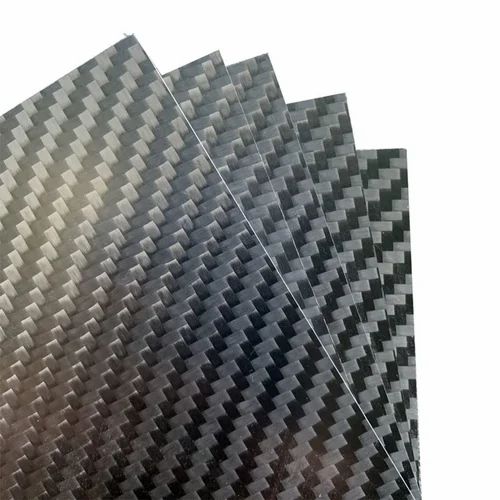 | Carbon Fiber Sheets Thickness 6 mm Material Carbon Fiber Usage/Application Commercial Product Type Finished I Deal In New Only Country of Origin Made in India We are... View product → |
Check holes, electrical contact and environmental risks before approval
A drilled hole can turn a sound laminate into a delaminated joint. Before approval, review the hole diameter, edge distance, countersink, fastener torque, bearing load and any required inserts; tensile or flexural coupons alone do not prove a finished bolted assembly.
- Confirm whether the panel is solid laminate or a foam or honeycomb sandwich. For a 6 mm quotation, request skin thickness, core type and adhesive system.
- Treat carbon laminate as conductive. Check unintended current paths, grounding and shielding, then specify isolation washers, glass-fibre isolation plies or a qualified coating where aluminium or live components are nearby.
- Define exposure limits for heat, moisture, chemicals, ultraviolet light, abrasion and vibration. Resin chemistry, not carbon fibre alone, controls much of the durability.
- If the equipment has a fire requirement, name the required fire-test standard and classification. “Carbon fibre” does not establish smoke, flammability or heat-release compliance.
- Request lot traceability and a certificate of conformity identifying fibre, fabric, resin, orientation, thickness and finish.
| Risk | What can fail | Evidence before approval |
|---|---|---|
| Machined holes | Delamination, cracking or joint slip | Drilling method, hole inspection and joint test |
| Electrical contact | Current leakage or galvanic corrosion with aluminium | Isolation design and electrical test |
| Environment | Swelling, softening or property loss | Resin-specific exposure and temperature data |
| Fire | Excess smoke or heat release | Report to the specified fire standard |
ASTM D3039, D790 and D6641 describe coupon tests; none alone qualifies the complete guard, fixture or bolted panel.
Frequently asked questions
How do you choose carbon fiber sheet thickness for industrial equipment?
Choose thickness from the part’s span, load direction, fastener loads and stiffness requirement. A short bracket can need thicker material than a larger, lightly loaded guard.
What mechanical data should you request from a carbon fiber sheet supplier?
Request laminate-specific tensile, flexural, compressive and interlaminar shear data, along with fibre orientation, resin system, test direction and test standard.
What dimensions and machining details belong in a carbon fiber sheet quotation?
Specify sheet length and width, thickness tolerance, flatness, cutout geometry, hole diameters, edge distances, surface finish and whether the supplier must machine or only cut the part.
How should you compare carbon fiber sheet prices in Nashik?
Compare the delivered, usable price after sheet size, cutting, machining, packaging, freight, taxes and expected rejects—not only the quoted price per square metre.
What should you check before approving a carbon fiber sheet part?
Check drilled-hole quality, edge delamination, fastener fit, electrical contact requirements, galvanic corrosion risk, temperature, chemicals, moisture and cleaning exposure.
Related product
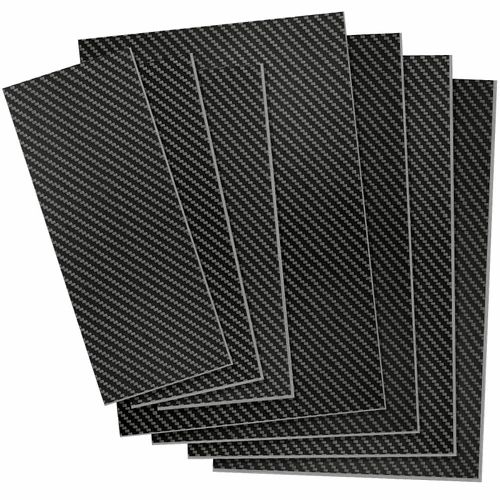 | Carbon Fiber Sheets Material Carbon Fiber Usage/Application Industrial Color Black Thickness 4mm Features Abrasion-Resistant Brand CarboNext Density 1.5 g/cm3 Country of... View product → |
Keywords