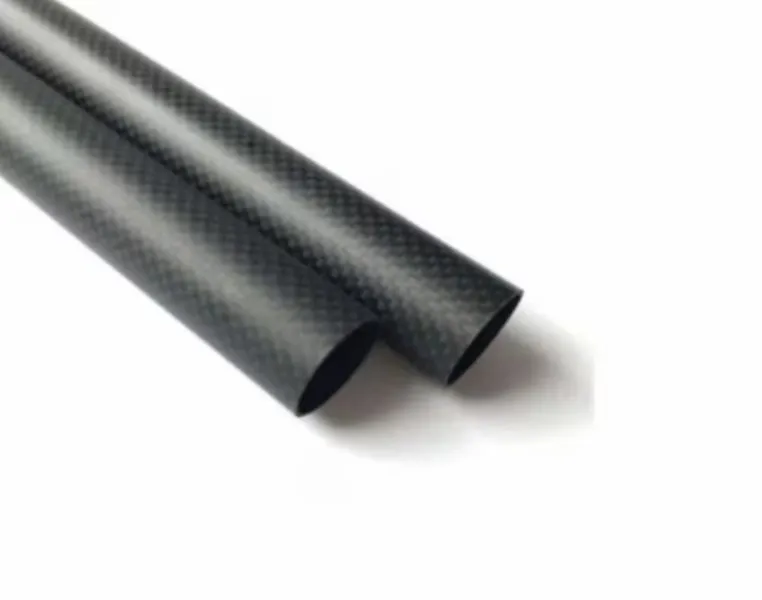
Reducing structural weight can have a direct impact on the performance of moving equipment. In robotics, industrial automation, drones, inspection systems, and aerospace-related applications, unnecessary mass can increase inertia, place additional demands on motors, and affect the efficiency of the overall system.
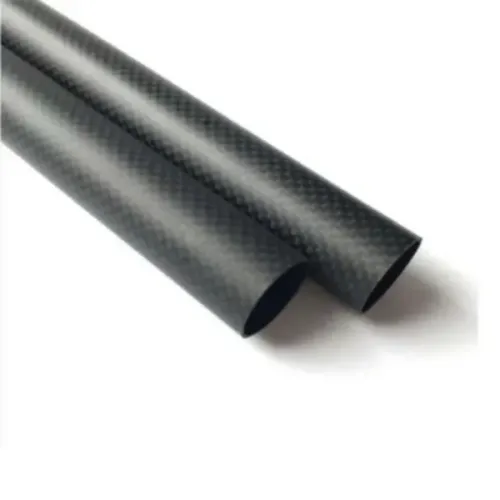
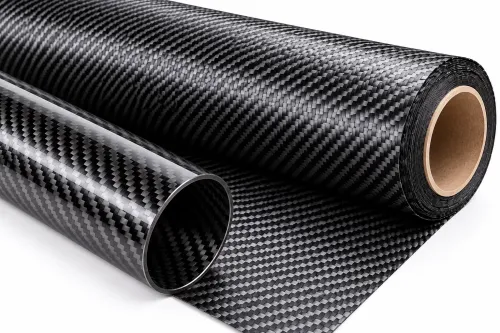
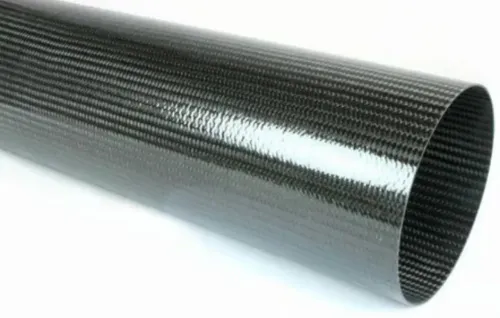
Carbon fiber tubes are frequently considered for these applications because their hollow geometry and composite construction can provide high stiffness at relatively low weight.
Carbon Fiber Tubes in Robotics
Robotic systems often contain moving arms, booms, frames, and support structures. Weight located away from a joint can have a particularly noticeable effect because motors must accelerate, decelerate, and control that mass repeatedly.
Replacing an appropriate metal tube with a properly designed carbon fiber tube may reduce structural weight while maintaining the stiffness required by the application.
Potential uses include:
- Robotic arms
- Lightweight end-effectors
- Camera and sensor supports
- Mobile robot structures
- Research robotics
- Automated inspection equipment
The actual tube specification should always be based on mechanical requirements rather than weight alone.
Applications in Industrial Automation
Automation equipment frequently performs repetitive movements at controlled speeds. Structural rigidity matters because unwanted deflection can affect positioning and repeatability.
Carbon fiber tubes can be useful for linear structures, machine extensions, sensor mounts, pick-and-place systems, lightweight cross members, and specialised automation assemblies.
Nashik's engineering and manufacturing ecosystem includes companies working with machinery, automotive production, fabrication, and industrial automation. Lightweight composite structures can therefore be relevant to equipment designers seeking alternative materials for specific moving assemblies.
Why Aerospace Applications Use Carbon Fiber
Weight has always been an important engineering consideration in aerospace applications. Carbon fiber composites can offer high specific stiffness and strength, making them useful when structural performance must be achieved with careful mass management.
Tube-based components may appear in unmanned aerial systems, equipment supports, test structures, lightweight frames, and specialised aerospace assemblies.
The design still needs to account for bending, torsion, compression, impact, connections, and environmental exposure.
Selecting the Correct Carbon Fiber Tube
A tube should not be selected by outside diameter alone. Engineers should evaluate:
- Outer and inner diameter
- Wall thickness
- Tube length
- Fiber orientation
- Expected bending loads
- Torsional requirements
- Connection and mounting method
- Dimensional tolerances
- Operating temperature
- Surface finish
Carbonext India Pvt Ltd manufactures carbon fiber products for customers with different industrial requirements, including applications where lightweight tubular structures are being evaluated.
For buyers in Nashik and other parts of Maharashtra, providing drawings and realistic operating conditions can make tube selection considerably more precise.
Carbon fiber tubes deliver their greatest value when geometry and laminate construction are matched to the actual forces experienced by the component. That engineering-led approach makes them particularly relevant to robotics, automation, aerospace, and other weight-sensitive systems.
Keywords